The Evolution of the DBA: From Database Operator to Global Strategic Architect
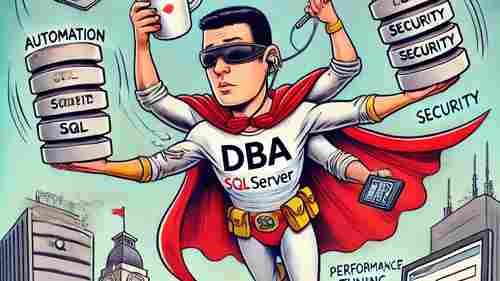
Let me say something that many people still don’t understand:
The DBA is not disappearing.
The DBA is evolving.
For years, people predicted the “death of the DBA” because of:
- Cloud platforms
- Managed databases
- Automation tools
- Autonomous systems
- AI-driven tuning
And yet, today, the role of the DBA is more critical globally than ever.
The difference?
The DBA is no longer just a database caretaker.
The DBA is becoming a strategic data architect.
The Old DBA vs. The Modern DBA
There was a time when being a DBA meant:
- Running backups
- Rebuilding indexes
- Monitoring disk space
- Tuning queries reactively
- Installing patches
- Managing on-prem servers
Those tasks still exist.
But they are no longer enough.
Today’s global data environment demands much more.
Modern DBAs operate in ecosystems that include:
- Hybrid cloud architectures
- Multi-cloud strategies
- Kubernetes-based deployments
- Infrastructure as Code
- DevOps pipelines
- Security compliance frameworks
- AI-driven workloads
- Data governance policies
The modern DBA must think beyond the database engine.
Automation Is No Longer Optional
Automation is not a “nice skill.”
It is survival.
When you manage:
- Dozens
- Hundreds
- Or thousands of instances
Manual operations become operational risk.
Modern DBAs must master:
- PowerShell
- Bash scripting
- Python
- Terraform
- Ansible
- CI/CD integration tools
- Database deployment automation (Flyway, Liquibase, Redgate)
Automation today means:
- Standardization
- Scalability
- Reduced human error
- Faster incident recovery
- Infrastructure reproducibility
If you are not automating, you are already behind.
Cloud Changed the Game — But Not the Responsibility
Cloud platforms like:
- Microsoft Azure
- AWS
- Google Cloud
- Oracle Cloud
Offer managed services:
- Azure SQL
- Amazon RDS
- Cloud SQL
- Autonomous Database
These reduce operational overhead.
But they do not eliminate responsibility.
They shift it.
Instead of managing hardware, the DBA now manages:
- Cost optimization
- Performance at scale
- Cross-region replication
- Latency design
- Data residency compliance
- Security posture
- Encryption strategies
- Access governance
Cloud did not kill the DBA.
Cloud exposed weak DBAs.
Security: The Global Battlefield
In today’s world, data breaches are not technical failures.
They are business catastrophes.
Global regulations include:
- GDPR (Europe)
- CCPA (California)
- HIPAA (US healthcare)
- LGPD (Brazil)
- PDPA (Asia)
The DBA sits at the center of:
- Encryption at rest
- Encryption in transit
- Column-level encryption
- Key management
- Role-based access control
- Audit logging
- Data masking
- Secure DevOps practices
The modern DBA must understand cybersecurity principles.
Not just database configuration.
Security is no longer a checkbox.
It is a board-level concern.
The Rise of the Hybrid and Multi-Cloud Architect
Most enterprises today are not fully cloud or fully on-prem.
They are hybrid.
Some are multi-cloud.
This means DBAs must understand:
- Replication across environments
- Network latency behavior
- Distributed transaction impact
- Disaster recovery across regions
- Cross-cloud identity management
- Storage tiering
The DBA is becoming a distributed systems professional.
DevOps and the Cultural Shift
The old model:
Developers build.
DBAs review.
DBAs approve.
Deployments are slow.
The modern model:
Developers and DBAs collaborate.
Database code is version-controlled.
Changes go through pipelines.
Testing is automated.
Infrastructure is reproducible.
DBAs today must:
- Understand Git
- Participate in CI/CD
- Review schema migrations
- Build deployment automation
- Design rollback strategies
The DBA is no longer a gatekeeper.
The DBA is an enabler.
Performance in the Cloud: It’s About Cost Now
In on-prem environments, poor performance meant:
Slow applications.
In the cloud, poor performance means:
Expensive bills.
Query tuning now directly affects financial impact.
Tools like:
- Query Store
- AWR
- Performance Insights
- Azure Database Watcher
Are not just performance tools.
They are cost optimization tools.
The DBA now protects both performance and budget.
Open Source and Strategic Flexibility
Globally, organizations are reconsidering licensing costs.
Enterprise database licensing can cost millions annually.
PostgreSQL has become a strategic alternative worldwide.
It offers:
- Advanced indexing
- JSON support
- Strong replication
- High availability tools
- Massive community support
Companies migrating from:
- Oracle
- SQL Server
- DB2
To PostgreSQL are not just saving money.
They are gaining flexibility.
The DBA must understand both commercial and open-source ecosystems.
Vendor lock-in awareness is now part of strategic database planning.
Artificial Intelligence and Data Engineering
AI is not replacing DBAs.
AI is consuming data.
And someone must:
- Ensure data integrity
- Guarantee data consistency
- Manage performance pipelines
- Design data storage strategies
- Secure training datasets
DBAs increasingly collaborate with:
- Data engineers
- Machine learning engineers
- Analytics teams
Structured data still requires governance.
AI without clean data is chaos.
The Future of the DBA Worldwide
The global DBA is evolving into:
- Data platform architect
- Cloud strategist
- Security guardian
- Automation engineer
- Performance specialist
- Cost optimizer
- Disaster recovery planner
The technical foundation still matters:
- High availability (Always On, Data Guard, Patroni)
- Replication
- Index design
- Partitioning
- Query tuning
- Backup architecture
But soft skills matter more now than ever:
- Communication
- Business understanding
- Risk assessment
- Cross-team collaboration
The DBA Is Not Dead. The Weak DBA Is.
If someone believes DBAs are becoming obsolete, it’s usually because they are looking at the old model.
The DBA who:
- Only clicks in management studio
- Avoids scripting
- Ignores automation
- Doesn’t understand cloud
- Doesn’t study security
Will struggle.
But the DBA who evolves becomes indispensable.
My Final Perspective
Globally, data is the most valuable asset organizations have.
Not infrastructure.
Not software.
Not hardware.
Data.
And someone must guarantee:
- Its availability
- Its integrity
- Its security
- Its performance
- Its recoverability
That someone is the DBA.
The tools changed.
The environment changed.
The expectations increased.
But the importance of the role?
It has never been greater.
If you are willing to evolve,
this is one of the most powerful careers in technology.
🚀 Ready to boost your career in data?
👉 DBAcademy – DBA & Data Analyst Training
Over 1,300 lessons and 412 hours of exclusive content.
Includes subtitles in English, Spanish, and French.
🔗 https://filiado.wixsite.com/dbacademy
💡 Start learning today and become a highly in-demand data professional.
Share this content:




Post Comment