Working in IT in the United States: The Real Game, The Real Barriers, and How to Compete at the Highest Level
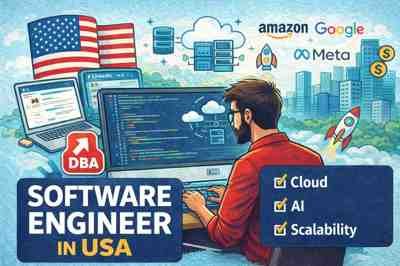
Let me start with something very clear:
The United States is not just another job market.
It is the most competitive IT market in the world.
And that changes everything.
If you want to work in IT in the U.S., you must stop thinking like a local candidate and start thinking like a global competitor.
Because that’s exactly what you are.
You are competing with:
- American graduates from top universities
- Engineers from India and China
- European cloud architects
- Senior developers from Latin America
- And professionals already inside the U.S. market
This is not a comfort zone market.
This is a performance market.
Why the U.S. IT Market Is Different
The U.S. is driven by:
Speed.
Scale.
Venture capital.
Product mentality.
Results.
Companies don’t hire based on stability alone.
They hire based on impact.
If you can create impact, you are valuable.
If you cannot demonstrate impact, you are invisible.
Is There Demand?
Yes. Massive demand.
But not for average professionals.
High demand areas include:
- Cloud Engineering (AWS, Azure, GCP)
- Cybersecurity
- DevOps / Platform Engineering
- Software Engineering (Backend, Distributed Systems)
- Data Engineering & AI
- Machine Learning
- Site Reliability Engineering (SRE)
- Product-focused Engineers
- FinTech & HealthTech specialists
Generalist IT roles are becoming commoditized.
High-skill roles are exploding.
Salary Reality (No Fantasy Numbers)
Let’s talk real numbers.
Mid-level Software Engineer:
$110,000 – $150,000 per year
Senior Engineer:
$150,000 – $200,000+
Cloud / DevOps / SRE:
$140,000 – $190,000
Security Engineers:
$130,000 – $180,000
AI / ML Engineers:
$160,000 – $220,000+
Top-tier companies (Big Tech or Unicorn startups):
$200,000 – $350,000 total compensation (base + stock + bonus)
But here’s the part nobody tells you:
Cost of living matters.
San Francisco, New York, Seattle are extremely expensive.
Remote roles are changing the game — but competition is even higher.
Visa Reality (Let’s Be Honest)
There are 3 main paths:
- H-1B Visa
Highly competitive lottery. Employer-sponsored. - L-1 (Internal Transfer)
Work for a multinational company and transfer. - O-1 (Extraordinary Ability)
For highly distinguished professionals.
Or:
Work remotely for U.S. companies from your country.
The easiest path today?
Remote-first companies.
The hardest path?
Trying to move without a strong technical brand.
The Interview Process in the U.S. Is Brutal (But Fair)
U.S. interviews are performance-based.
You will go through:
1. Recruiter Screen
Communication, compensation expectations, eligibility.
2. Technical Screening
Live coding.
System design.
Problem solving.
Yes — even seniors.
If you panic under pressure, this market will expose it.
3. System Design Interview (Critical for Seniors)
Expect questions like:
- Design a scalable URL shortener.
- Design a global payment system.
- Design a distributed logging platform.
- How would you scale a system to 10 million users?
This is not about frameworks.
It’s about thinking at scale.
If you only know how to build CRUD APIs, you will struggle.
4. Behavioral Interview
The U.S. cares deeply about ownership.
Expect questions like:
- Tell me about a time you failed.
- Tell me about a conflict in your team.
- Tell me about a high-pressure incident.
They want accountability.
Not excuses.
The Biggest Gap International Candidates Have
Technical skill is not the biggest problem.
Communication is.
Many professionals:
- Speak English technically.
- But cannot tell a structured story.
- Cannot explain trade-offs clearly.
- Cannot defend architecture decisions confidently.
In the U.S., storytelling matters.
You must articulate impact.
Instead of saying:
“I worked with AWS.”
Say:
“I migrated a legacy monolith to AWS, reducing infrastructure cost by 35% and improving deployment frequency from monthly to daily.”
Impact.
Numbers.
Clarity.
LinkedIn Strategy for the U.S. Market
If your LinkedIn is local, you are invisible.
Your LinkedIn must:
- Be 100% in English.
- Have a strong headline.
- Highlight measurable impact.
- Include cloud keywords.
- Include distributed systems knowledge.
- Include GitHub (if developer).
- Include published technical content.
Start posting in English.
Share:
- Case studies.
- Architecture breakdowns.
- Incident lessons learned.
- Performance optimization wins.
- Cloud cost strategies.
U.S. recruiters search for visible experts.
If you don’t exist online, you don’t exist in the market.
Certifications vs Real Knowledge
Let me be very clear.
The U.S. does not care much about certifications alone.
AWS Certified?
Good.
But can you design a multi-region architecture under load?
That matters more.
Certifications open doors.
Knowledge closes deals.
The AI Factor in the U.S.
AI is reshaping hiring.
Entry-level coding tasks are increasingly automated.
The future belongs to engineers who:
- Understand system design.
- Can reason about scale.
- Can integrate AI into systems.
- Can optimize architecture.
The low-complexity layer of development will shrink.
The architecture and strategic layer will grow.
The Mindset Shift You Need
If you want the U.S. market:
Stop thinking job.
Start thinking value creation.
Ask yourself:
- Can I design distributed systems?
- Do I understand scalability deeply?
- Can I reduce infrastructure cost?
- Can I lead incident response?
- Can I automate complex workflows?
- Can I explain technical trade-offs clearly?
If the answer is yes — you are competitive.
If the answer is maybe — you need preparation.
The Real Long-Term Strategy
Year 1:
- Deepen cloud knowledge.
- Improve spoken English.
- Practice system design.
- Publish technical content.
Year 2:
- Apply consistently.
- Do mock interviews.
- Build GitHub portfolio (if dev).
- Target remote-first U.S. companies.
Year 3:
- Secure remote U.S. role or internal transfer.
- Build reputation inside the company.
- Expand compensation via performance.
This is not a lottery.
This is positioning.
Final Words
The U.S. IT market rewards:
Impact.
Ownership.
Clarity.
Scale thinking.
Execution under pressure.
It does not reward:
Comfort.
Excuses.
Shallow knowledge.
Framework memorization.
If you want to compete in the U.S., you must operate at a higher standard.
Not because it’s America.
But because it’s the most performance-driven tech market in the world.
And if you can compete there…
You can compete anywhere.
🚀 Ready to boost your career in data?
👉 DBAcademy – DBA & Data Analyst Training
Over 1,300 lessons and 412 hours of exclusive content.
Includes subtitles in English, Spanish, and French.
🔗 https://filiado.wixsite.com/dbacademy
💡 Start learning today and become a highly in-demand data professional.
Share this content:



Post Comment