Why Many IT Professionals Get Stuck in Their Careers
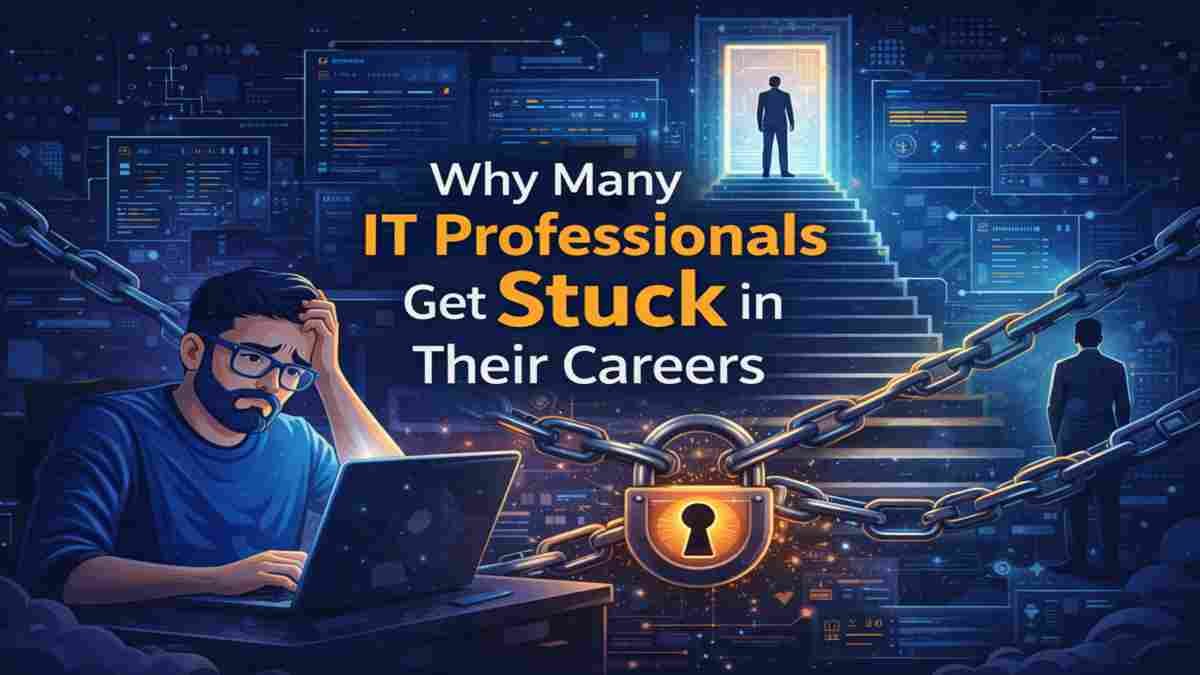
A conversation I wish someone had with me earlier in my career
There is something that took me years to understand about careers in technology.
And the truth is… it’s not a comfortable conversation.
If you stay long enough in this industry, you start noticing something strange.
You meet people who have been working in IT for 15 or 20 years, and yet their careers feel… stuck.
Same role.
Same type of problems.
Same salary range.
Same frustrations.
And at the same time, you see other professionals — sometimes younger, sometimes with fewer years in the field — moving much faster.
Better projects.
Better salaries.
More influence in companies.
At some point I started asking myself a difficult question:
Why does this happen?
And after years working with databases, production systems, teams, incidents, and companies in different countries, I began to see some patterns.
Not theories.
Patterns.
The kind of patterns you only notice after you’ve been through good situations… and some very painful ones too.
So let me share a few things that I think are important for anyone in IT — especially for people who feel a little lost in their careers.
The Moment When Learning Quietly Stops
One of the most dangerous moments in an IT career is not when you fail.
It’s when you become comfortable.
Comfort is seductive.
You learn a technology well.
People in the team start coming to you with questions.
You know how to solve most of the daily problems.
Life becomes predictable.
And without noticing, something subtle starts happening.
You stop learning the uncomfortable things.
You stop exploring areas outside your immediate responsibilities.
You stop feeling like a beginner again.
And here’s the thing about technology:
Standing still for five years is almost the same as moving backwards.
I’ve seen people who technically have “10 years of experience”… but in reality they repeated the same two or three years of experience multiple times.
That’s harsh, but it’s real.
The Tool Trap
Another thing that traps a lot of IT professionals is what I call the tool trap.
People start defining themselves entirely by the tools they use.
You hear things like:
“I’m a SQL Server DBA.”
“I’m a Java developer.”
“I’m a DevOps engineer.”
“I’m a React developer.”
There’s nothing wrong with specialization.
But there is something dangerous about building your entire identity around a tool.
Because tools change.
Frameworks change.
Cloud platforms evolve.
What doesn’t change are fundamental problems:
- systems need to scale
- data needs to be reliable
- performance matters
- failures happen
- businesses depend on systems working
The professionals who keep growing in this industry are rarely the ones who know a tool.
They are the ones who understand the problems behind the tool.
A DBA who understands:
- how data grows
- how systems behave under load
- how queries behave under pressure
- how architecture decisions affect performance
will survive many technology waves.
Someone who only knows how to click buttons in a specific tool will struggle when that tool stops being fashionable.
The Production Incidents That Change You
There is something about production incidents that changes the way you see technology.
You remember them.
Not the easy days.
The hard nights.
The systems that slowed down and nobody knew why.
The query that suddenly started consuming all CPU.
The blocking chain that froze the system.
The moment when everyone was looking at the database server and asking:
“What is happening?”
Those moments teach things that no course can teach.
You start learning how systems behave under pressure.
You start recognizing patterns.
You start noticing things like:
“Something changed in the execution plan.”
“Statistics are misleading the optimizer.”
“This looks like parameter sniffing.”
“This workload is killing the storage.”
And little by little, the way you think changes.
You stop looking only at the command.
You start looking at the behavior of the system.
That shift is huge.
And many professionals never go through it because they avoid difficult environments.
Ironically, those difficult environments are where the biggest learning happens.
The Invisible Skill Nobody Talks About
Let me tell you something that changed my career more than learning any specific technology.
Understanding the business.
This is something many technical professionals ignore.
But companies don’t run databases, APIs, pipelines, and servers just because they are interesting.
They run them because those systems support:
- revenue
- operations
- logistics
- analytics
- compliance
- customer experience
When you start understanding why the data matters, something changes.
You begin asking different questions.
Instead of:
“How do I optimize this query?”
You start asking:
“Why does this query exist in the first place?”
Instead of:
“How do I improve performance?”
You ask:
“Which queries actually affect the business?”
Some queries are slow but irrelevant.
Some queries are fast but business critical.
Understanding that difference changes the way companies see you.
You stop being just a technical operator.
You become someone who understands the impact of systems on the business.
And companies value that much more than pure technical knowledge.
The Hard Truth About Growth
Let me be very honest here.
Growing in this industry requires doing things that are uncomfortable.
It requires:
Reading documentation that is not easy.
Studying execution plans when nobody asked you to.
Analyzing problems that are not in your job description.
Understanding systems beyond your daily tasks.
Learning how systems fail.
Learning how systems scale.
Learning how systems break under pressure.
Most professionals don’t stop growing because they lack intelligence.
They stop because they stop pushing themselves into uncomfortable learning situations.
The Career Plateau
Another thing I have seen many times is the career plateau.
People reach a point where their career stabilizes.
Not in a good way.
They know their job.
They perform well enough.
But nothing really changes anymore.
No major new responsibilities.
No big salary jumps.
No strategic roles.
And after some years they begin wondering:
“Why is my career not moving forward?”
The answer is often painful.
Because the skills that helped someone reach their current position are not the same skills needed for the next level.
At some point, pure technical ability is not enough.
You also need:
- communication
- architecture thinking
- business awareness
- leadership
- decision making under uncertainty
Many professionals never make that transition.
The Professionals Who Keep Moving
If you observe the professionals who continue evolving in this industry, they often share some common traits.
They are curious.
They ask questions.
They try to understand systems deeply.
They are not satisfied with superficial answers.
They read things that are outside their comfort zone.
They talk to people from different areas:
- developers
- architects
- infrastructure teams
- data teams
- business stakeholders
And they care about something many people ignore.
They care about understanding the system as a whole.
Not just their piece of it.
The Path Forward (If You Feel Stuck)
If someone in IT feels stuck in their career, the solution usually isn’t learning another framework or tool.
It’s something deeper.
It usually involves asking questions like:
Do I understand how the systems I work with actually behave under load?
Do I understand how my work affects the business?
Am I learning things that will still matter five years from now?
Am I curious about problems outside my immediate responsibilities?
Am I becoming more valuable to the company… or just more comfortable?
Those questions can be uncomfortable.
But they are powerful.
Because careers rarely change direction suddenly.
They change direction when someone starts thinking differently about their work.
One Last Thought
Technology careers are strange.
You can spend years doing the same things without noticing you stopped evolving.
And then one day you realize something important:
The professionals who keep growing are not the ones chasing every new trend.
They are the ones who continue developing depth.
Depth in systems.
Depth in data.
Depth in understanding how technology actually supports real businesses.
And that kind of depth takes time.
But it is exactly what prevents a career from getting stuck.
🚀 Ready to boost your career in data?
👉 DBAcademy – DBA & Data Analyst Training
Over 1,300 lessons and 412 hours of exclusive content.
Includes subtitles in English, Spanish, and French.
🔗 https://filiado.wixsite.com/dbacademy
💡 Start learning today and become a highly востребed data professional.
Share this content:



Post Comment